Laser Hair Removal for Trans Women, What You Need to Know
A warm, simple guide to laser hair removal for trans women, covering face and body areas, session numbers, comfort, results, and gentle aftercare.
Smooth, hair free skin can sit at the heart of a transition, and you deserve clear, honest answers about how to get there. Thick facial and body hair chips away at daily confidence for many trans women. The reassuring part is that modern laser treatment is safe, comfortable, and genuinely effective in trained hands. At Elegance Transgender Clinic in Surat, we walk you through every part of the process with care and patience.
Below we explain how the treatment works, which areas you can treat, and what real results look like. We also weigh laser against electrolysis in plain words, so you can choose with confidence.
Key Takeaways
- Laser hair removal for trans women uses focused light to reduce unwanted facial and body hair over several visits.
- Most people need six to ten laser sessions, spaced four to eight weeks apart, because hair grows in cycles.
- The face, chest, back, underarms, and bikini area are all common and safe treatment zones.
- Laser works best on dark hair, while electrolysis can treat very light, grey, or fine hair.
- Gentle aftercare, sun protection, and patience give you the smoothest, longest lasting results.
What is laser hair removal for trans women?
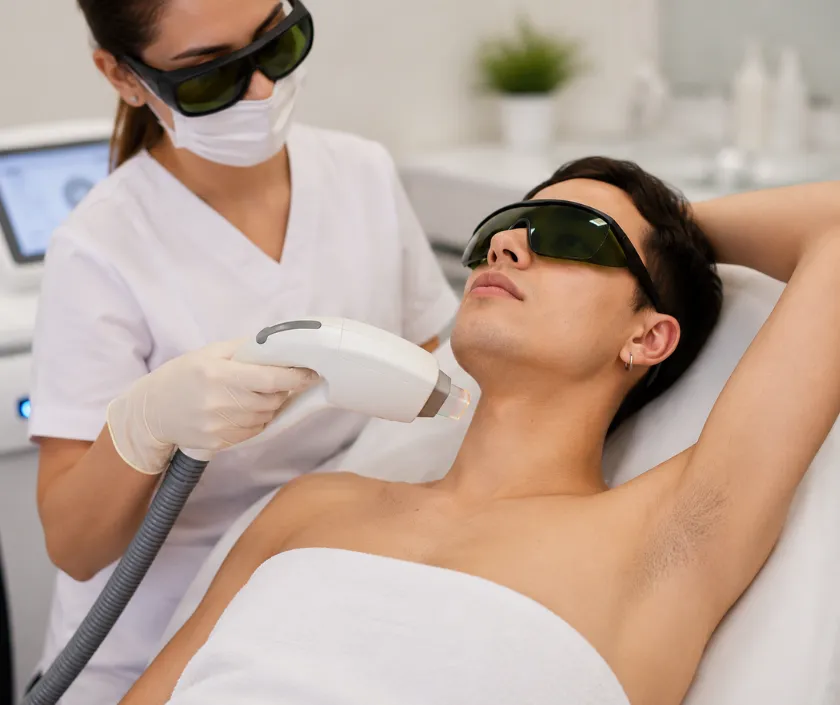
Laser hair removal for trans women uses focused light to target the colour inside each hair. That light becomes heat, which weakens the root so hair grows back finer and slower. Since hair grows in cycles, it takes several sessions to reach every follicle.
The laser is drawn to melanin, the dark pigment in your hair. As the root soaks up the energy, it slowly stops producing thick hair. Treated areas feel softer and look much clearer over the weeks that follow. That is exactly why so many trans women make laser a key step in feminisation.
The treatment is non surgical and needs no downtime, so you can head straight back into your day. Each pulse covers a small patch of skin, and the device glides across the area in minutes. Even larger zones move faster than people tend to expect.
Melanin: the natural pigment that gives hair and skin their colour, and the part the laser light targets to reduce hair growth.
Results build slowly, but the change usually holds for the long term. Treating the face and body together can save time and feel more rewarding too. To see how hair removal sits alongside other gentle treatments, browse our aesthetic and non surgical options.
Which face and body areas can be treated?
Almost every visible area can be safely treated, face and body alike. Popular zones include the upper lip, chin, jaw, cheeks, neck, chest, back, shoulders, underarms, arms, legs, and the bikini line. Each area carries different hair, so your plan is always shaped around your goals and comfort.
Facial hair removal is usually the first priority for trans women, since the beard area holds thick, deep rooted hair. The face often needs more sessions than the legs or arms. Body areas with finer hair tend to clear a little faster.
- Face and neck: upper lip, chin, jawline, cheeks, and sideburn area for a softer profile.
- Upper body: chest, back, shoulders, and underarms for smoother everyday skin.
- Lower body: arms, legs, and bikini line, which many people find quick and satisfying.
Thinking about other steps in your journey too? Our team can connect treatments through our wider transition support services, so your hair removal plan slots neatly in with everything else.
How many laser sessions will you need?
Most trans women need six to ten laser sessions for strong, lasting results. Visits sit four to eight weeks apart, since hair grows in stages and only active hair responds to the light. After the main course, the odd top up keeps the skin smooth.
The exact number turns on your hair colour, skin tone, hormone levels, and the area treated. Coarse beard hair, for instance, often needs more visits than light leg hair. At your first consultation, we assess your skin and hair, then set a realistic plan.
The hair cycle explains the spacing. At any one moment, only some hairs are actively growing, and the laser works best on those. Repeat sessions catch new hairs as they enter that phase. This patient, spaced rhythm is what delivers clean, even results.
Electrolysis versus laser, which is better?
Both methods reduce unwanted hair, but they work differently. Laser uses light to treat many hairs quickly and suits dark hair on most skin tones. Electrolysis treats one hair at a time with a fine probe and can reach the grey, blonde, or very fine hair that laser may skip.
In practice, many trans women use both. Laser clears the bulk of dark, coarse hair fast, then electrolysis mops up the stubborn light hairs left behind. That pairing is what makes the final result look genuinely complete.
- Laser strengths: faster sessions, large areas covered, and excellent results on dark hair.
- Electrolysis strengths: works on any hair colour and gives permanent removal of individual hairs.
- Best approach: start with laser for speed, then refine with electrolysis where needed.
For trusted background reading on hair removal methods, review independent NHS guidance on cosmetic treatments. You can also read more about our own approach on the laser hair removal treatment page.
Does laser hair removal hurt?
Most people feel a quick warm snap, often likened to a light elastic band flick against the skin. The sensation is brief and usually very manageable, especially on the body. Sensitive spots like the upper lip can sting a touch more, yet cooling tools and numbing cream keep you comfortable.
Modern machines build in cooling systems that protect and calm the skin through each pulse, so treatments feel easier than people expect. Comfort tends to improve over time as well, since thinner regrowth means less sensation at later visits.
We check your comfort before and during the session. If anything feels too strong, we adjust the settings on the spot. Your ease and safety steer every part of the appointment.
What results can you expect?
After a full course, most trans women see a large, lasting drop in hair, often well above eighty percent in treated areas. Skin feels smoother, shaving becomes rare, and any regrowth comes back finer and lighter. The occasional maintenance visit keeps these results steady over the years.
Results arrive gradually rather than overnight, which is completely normal. Between sessions you may notice hairs shedding and patches thinning out. Across several months, the overall density keeps falling, and the skin looks calm and clear.
Hormone therapy can shift body hair over time, so your plan may evolve as your body does. We review your progress at each visit and adjust accordingly. Many clients in Surat tell us this steady progress feels deeply affirming.
Laser cuts hair dramatically, but set honest hopes. A little fine hair may always linger, and that is completely normal. Even so, the gap between thick beard growth and soft, sparse regrowth can feel life changing for many trans women.
Skin types, hair types, and safety
Laser suits a wide range of skin tones and hair colours, provided the settings match each person carefully. Dark, coarse hair on lighter skin responds fastest, while darker skin calls for specific laser types and careful energy levels. A trained clinician keeps treatment both effective and safe.
Before we begin, a patch test checks how your skin reacts. This small step lowers the risk of burns or pigment changes, which matters on Indian skin tones in particular. Surat is warm and sunny, so we also talk through your sun habits, since tanned skin needs extra caution.
Very light, grey, or white hair holds little pigment, so laser may struggle with it. In those cases we may suggest electrolysis instead. For skin friendly habits between visits, our patient education resources cover gentle skincare while on hormone therapy.
How should you care for your skin afterwards?
Good aftercare protects your results and keeps the skin calm. For a few days, steer clear of hot water, heavy sweating, saunas, and direct sun on the treated area. Apply a mild moisturiser and a daily broad spectrum sunscreen, and never pick at any shedding hairs.
Mild redness or slight warmth is common and usually settles within hours. A cool compress soothes the area if it feels sensitive. Loose, soft clothing helps treated body zones stay comfortable.
- First two days: skip gyms, steam rooms, swimming pools, and very hot showers.
- Sun care: use sunscreen daily and stay shaded, which matters a lot in sunny Surat.
- Between sessions: shave if needed, but avoid waxing or plucking, since the root must stay for the laser.
Stick to these simple habits and your progress runs smoother and faster. Curious about other gentle, non surgical options? Our aesthetic and non surgical treatments pair nicely with a hair removal plan.
Ready to start your hair free journey?
You deserve treatment that feels safe, kind, and built around you. If you are ready to explore laser hair removal in a calm, supportive setting, we would love to welcome you. Book a private consultation at Elegance Transgender Clinic in Surat through our friendly contact and appointment page, and let us help you feel wonderfully at home in your own skin.