Monday to Saturday, 10:00 AM to 7:30 PM Adajan & Vesu, Surat

Guides on transgender care, surgery and recovery

Clear, expert answers on facial and body procedures, aesthetics, hormones and healing from the team at Elegance Transgender Clinic, Surat.

Does Gender Transition Solve Everything? What It Changes, and What It Does Not
14 min read

Does Gender Transition Solve Everything? What It Changes, and What It Does Not

Gender transition can substantially reduce gender dysphoria, but it does not automatically resolve every difficulty in a person's life. Housing, employment, family relationships, anxiety and depression are separate problems that need their own support. Expecting transition to solve them all sets up disappointment that is avoidable with honest preparation.

Read article
When Hormone Therapy Has Plateaued: Considering Breast Augmentation
11 min read

When Hormone Therapy Has Plateaued: Considering Breast Augmentation

Breast augmentation transgender women consider after hormone therapy is usually timed to the plateau, because operating while tissue is still developing changes the result. Most breast development happens in the first months of hormone therapy. Assessment covers tissue quality, chest proportions and what implants can realistically achieve.

Read article
Metoidioplasty vs Phalloplasty: Differences, Recovery, Cost and How to Decide
13 min read

Metoidioplasty vs Phalloplasty: Differences, Recovery, Cost and How to Decide

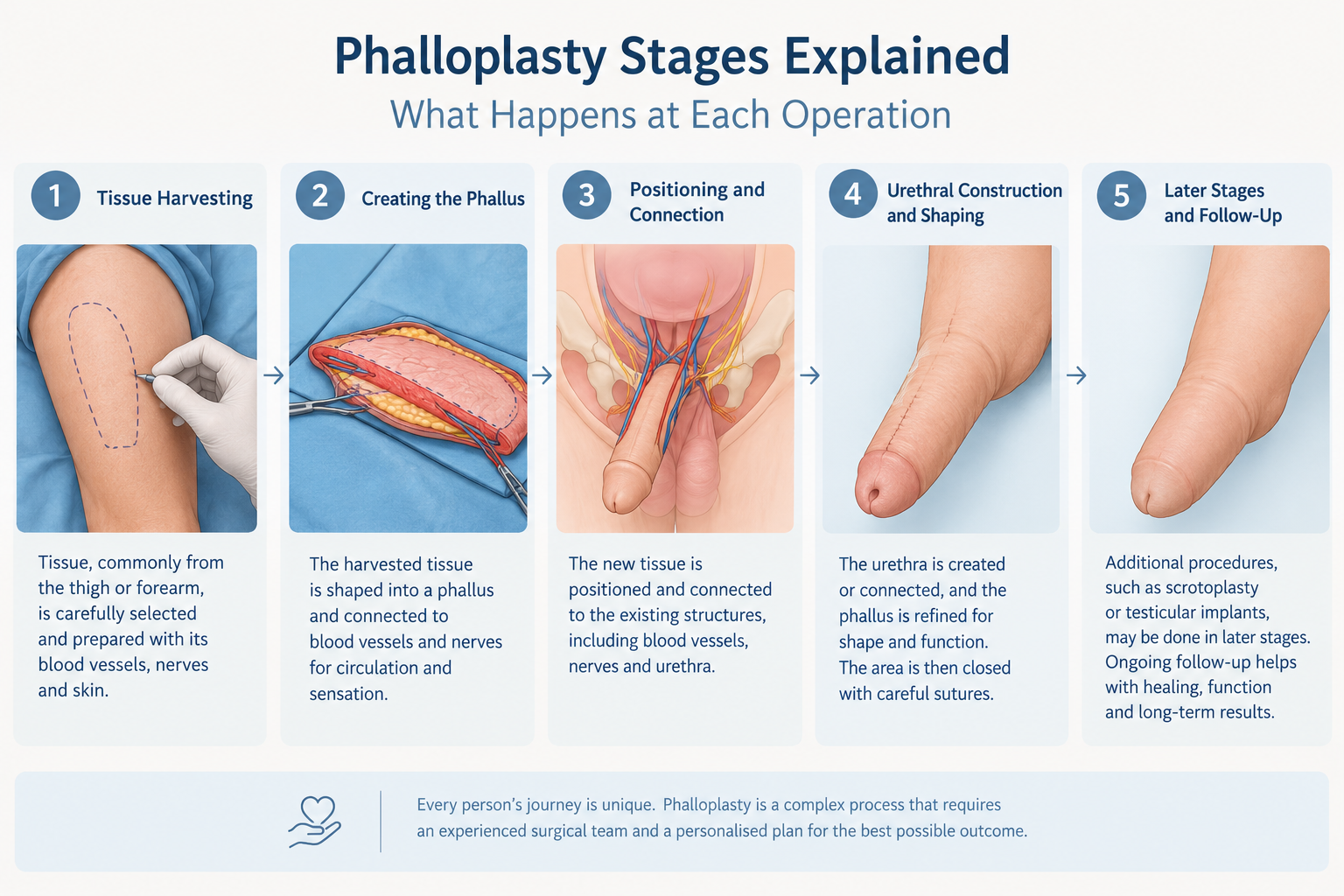
Metoidioplasty releases the testosterone-enlarged clitoris to form a small phallus with preserved erogenous sensation, usually in one or two stages. Phalloplasty builds a full-size phallus from a forearm or thigh flap, needs multiple stages and an implant for rigidity, and has a longer recovery. Metoidioplasty has fewer complications; phalloplasty offers greater size.

Read article
Hair Removal Before Bottom Surgery: Laser, Electrolysis and Planning the Timeline
8 min read

Hair Removal Before Bottom Surgery: Laser, Electrolysis and Planning the Timeline

Hair removal before bottom surgery needs to be planned months rather than weeks in advance. When hair-bearing donor skin may be used to create internal genital structures, permanent hair reduction or removal may be required in specific areas before surgery. Depending on hair colour, skin type, surgical technique and the surgeon's requirements, preparation may involve laser, electrolysis or both.

Read article
Hormones Around Surgery: Stopping, Continuing and Restarting Safely
8 min read

Hormones Around Surgery: Stopping, Continuing and Restarting Safely

Advice about stopping hormones before surgery is not the same for every patient undergoing gender-affirming surgery. The plan depends on the hormone being used, the type of operation, personal clot risk and the surgical team's protocol. Oestrogen may require specific consideration because of clot risk, while testosterone is often managed differently.

Read article
Dilation After Vaginoplasty: Schedule, Technique and Long-Term Maintenance
9 min read

Dilation After Vaginoplasty: Schedule, Technique and Long-Term Maintenance

Dilation after vaginoplasty is an important part of maintaining the surgical result rather than an optional extra. Many protocols start with frequent daily sessions during early recovery, then gradually reduce the frequency over the following months. The exact neovagina dilation schedule, dilator size and long-term routine should always follow the operating surgeon's instructions.

Read article
Frequently Asked

Questions about treatment and care

If your question is not here, simply write to us. We reply within one working day, and always in confidence.

Start with a personal assessment. A specialist reviews your goals, health and features, then explains which options suit you. Because every body is different, the right plan is always built around the individual, not a fixed package.

There is no single price, because the cost depends on the procedures chosen and how many areas are treated. A combined surgery costs more than a single step. So a clear quote is only possible after a proper consultation.

When performed by an experienced surgical team in a proper facility, these procedures are very safe. Risks are explained clearly beforehand, and careful planning, hygiene and follow up care keep complications low.

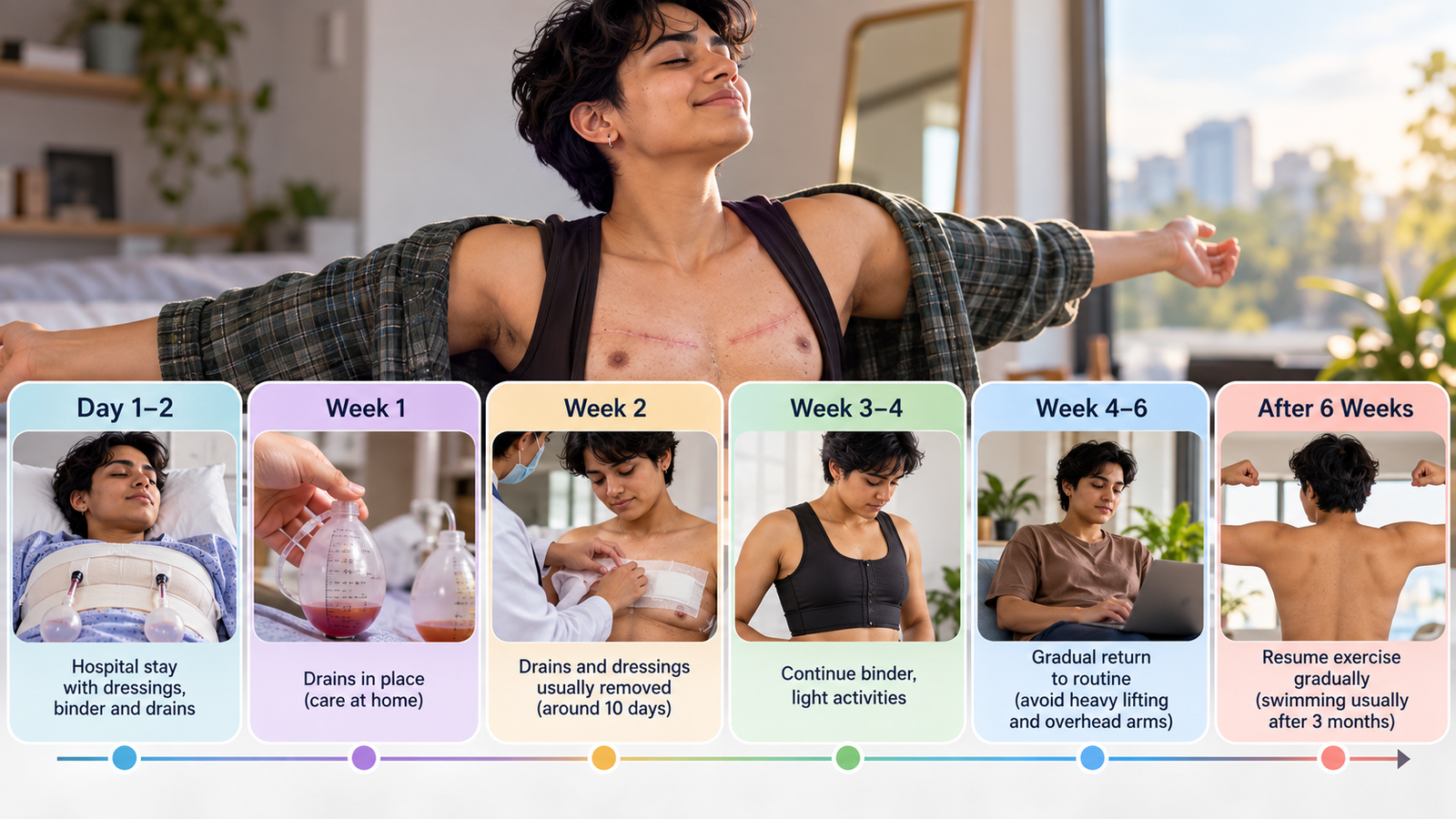
Most people return to light activity within two to three weeks, while deeper healing continues for several months. Recovery time varies with the procedure, so a personal timeline is shared before surgery.

Yes, many people combine procedures in one planned surgery. This means a single recovery instead of several. However, the safe limit depends on your health and the areas treated, which an assessment confirms.

It depends on the procedure. Some surgeries benefit from hormone therapy first, while others do not need it. A specialist explains what fits your plan during the consultation.

Book a Private Consultation

Ready when you are

Reach out whenever you feel ready. You can book online, call us, or send a quiet WhatsApp message. Every conversation stays completely confidential.