Breast Augmentation for Trans Women, Implants or Fat Transfer
Wondering whether implants or fat transfer suits you best? Here is a clear, caring guide to breast augmentation for trans women, covering hormones, sizing, scars, safety, and recovery.
Breast augmentation is a deeply personal step, and the first question most trans women bring us is the same one. Implants, or fat transfer? Both can create soft, natural looking curves, yet they get there along very different routes. Here we explain each choice in plain words so you can decide with confidence.
At Elegance Transgender Clinic in Surat, we treat every body as unique, which means the best method for one person may be wrong for another. Dr. Ashutosh Shah guides each patient toward the option that matches their goals, body, and comfort.
Key Takeaways
- Breast augmentation for trans women uses either implants or fat transfer, and sometimes a careful mix of both.
- Implants give a bigger, more predictable size boost, while fat transfer offers a softer, more subtle result.
- Most surgeons advise at least one year on hormones before surgery, because hormones grow some natural tissue first.
- Scars from implants are small and well hidden, whereas fat transfer leaves almost no visible marks.
- Recovery is usually quicker with fat transfer, although both methods need gentle care for several weeks.
- A personal consultation helps match your chest, skin, and dreams to the safest, most flattering plan.
Breast augmentation: a surgery that increases the size and shape of the chest, either by placing soft implants or by adding your own fat from another body area.
What is breast augmentation for trans women?
Breast augmentation for trans women is surgery that builds fuller, more feminine breasts. The surgeon either places soft implants behind the chest tissue or moves your own fat into the area. The aim is balanced, natural looking curves that suit your frame and feel right to you.
This procedure anchors chest feminization. Hormones alone often bring only modest growth, so many women want more shape. Results vary widely from person to person, which is why a tailored plan matters so much. Our team listens first, then suggests the method that fits your body and your wishes. You can learn more about our wider body transformation services if you are weighing several changes at once.
Should you start hormones before surgery?
Yes. Most surgeons strongly recommend at least one full year on feminising hormones first. Over that time, your breasts develop some natural tissue and the chest skin softens, so surgery can build on that base for a smoother, more natural result. Patience here genuinely pays off later.
Hormones bring real, if gentle, breast growth in many trans women. That growth often stays small and a little uneven, though. Waiting a year lets your body reach its natural peak. After that, surgery adds the size and shape hormones cannot reach on their own.
- Hormones soften the skin, which helps it stretch comfortably over an implant.
- Natural tissue gives a fuller starting point, so the final look feels less artificial.
- Waiting also lets you settle into your changing body before making surgical choices.
For trusted medical background on hormone therapy, see NHS guidance. Our transition support team can walk beside you through every stage, including the timing of surgery around hormones.
Trans breast implants, what to expect
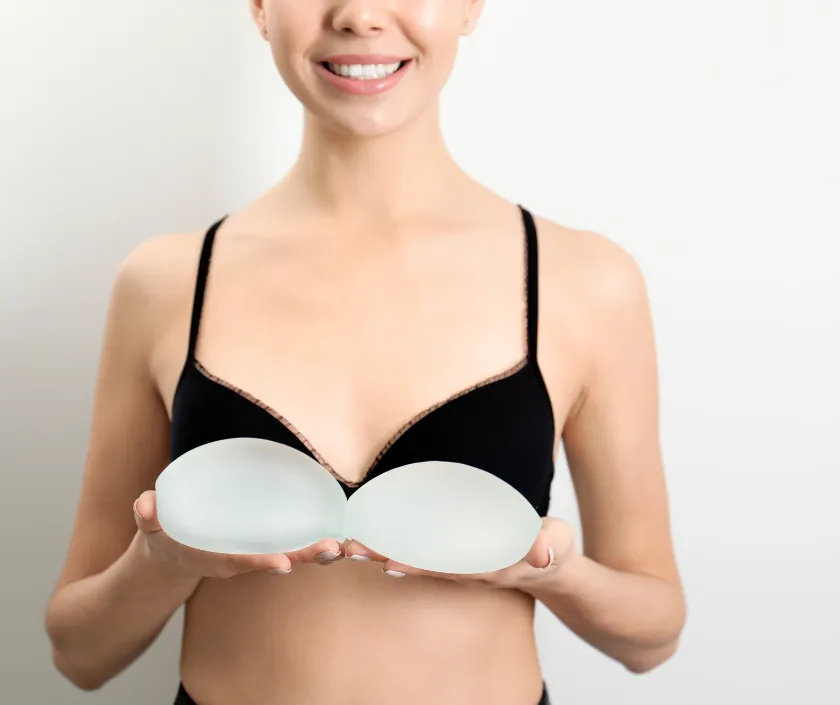
Implants are the most common choice for MTF breast surgery, especially when a clear size jump is the goal. The surgeon places a soft silicone or saline pouch behind the breast tissue or chest muscle. Since the size is chosen in advance, the outcome is fairly predictable.
Sizing and shape
At your consultation, you can try sizers to picture different volumes. Round implants add upper fullness. Teardrop shapes look more sloped and subtle. Your frame, shoulder width, and skin all steer the choice, and we aim for balance so your chest suits the rest of your body.
Scars and placement
Implant scars are small and tucked into hidden spots, such as the crease under the breast. They fade over time until they are hard to spot. Careful surgical technique keeps scarring as discreet as possible, and most patients feel the trade is well worth the lasting shape.
Fat transfer breast augmentation, a gentle option
Fat transfer uses your own body fat in place of an implant. The surgeon removes fat from areas like the belly, hips, or thighs through liposuction, purifies it, then injects it into the breasts. You gain softer curves and a slimmer donor area in one go.
This method appeals to women who want a natural feel and no foreign material. The fat is your own, so the breasts move and feel very real. Fat transfer adds less volume than implants, though, usually a modest increase per session, so it suits subtle shaping rather than a dramatic change.
- No implant means no implant related worries over the years.
- Liposuction slims another area, giving a smoother overall silhouette.
- Scars are tiny, since fat enters through small needle points.
- Some transferred fat fades, so a second session is occasionally needed.
If you are reading about other procedures too, our piece on BBL for trans women explains how fat transfer reshapes the hips and buttocks.
Which option suits you best?
The right choice rides on your goals, your body fat, and your skin. Implants suit women wanting clear, larger volume with a reliable result. Fat transfer suits those after a soft, subtle look with no implant. Sometimes a careful blend of both gives the most natural finish.
At your visit, we assess your chest tissue, skin laxity, and available donor fat. Slim patients may lack enough fat for transfer alone, so implants often work better. Women with extra fat to spare may love the dual benefit of fat transfer. Each path carries trade offs, so an honest conversation shapes the safest plan.
When implants are a better fit
- You want a larger, clearly visible increase in size.
- Your natural fat stores are limited for harvesting.
- You prefer one main procedure with a predictable outcome.
When fat transfer is a better fit
- You want a soft, modest, very natural result.
- You have spare fat that could also slim another area.
- You prefer no implant and tiny, barely visible scars.
How safe is this surgery?
Breast augmentation is generally very safe in the hands of an experienced plastic surgeon. Serious problems are rare, and most patients heal smoothly. Every surgery carries some risk, of course, such as infection, bleeding, or uneven results. Choosing a skilled, qualified surgeon brings those chances down sharply.
With over 22 years of experience, Dr. Ashutosh Shah keeps safety front and centre at every step. Sterile technique, gentle handling, and clear aftercare instructions all trim the risk. Implants last a long time, though they may need attention many years on. Fat transfer sidesteps implant risks, yet a small amount of fat can reabsorb. We explain each risk openly, so you decide fully informed.
What is recovery like?
Recovery is usually manageable, with most women back to light routines within one to two weeks. Mild swelling, tightness, and bruising are normal early on. Fat transfer often heals a touch faster, though the donor area needs gentle care. Following your surgeon's advice closely speeds healing and protects your result.
In the first days, rest and gentle movement keep blood flowing without strain. We provide a supportive garment to ease swelling and hold the new shape. Heavy lifting and intense exercise wait several weeks so tissues settle safely. Most patients see their final shape after a few months, once swelling fully fades.
- Wear your support garment exactly as advised for the best shape.
- Avoid strenuous activity until your surgeon clears you.
- Attend follow up visits, so healing stays on track.
- Eat well and stay hydrated to support tissue repair.
Patients across Surat and nearby Gujarat choose Elegance Transgender Clinic for calm, private care and detailed aftercare. Our transition support resources can also help you plan your timeline, including whether to sequence chest surgery before or after hormones.
Ready to take the next step?
Your chest should reflect the woman you are. Whether implants or fat transfer feels right, a personal plan makes all the difference. We are here to answer every question with patience and respect. To explore your options in a calm, confidential setting, please book a private consultation with Elegance Transgender Clinic in Surat. Reach out today, and let us help you move toward a body that feels truly your own.