Hairline Restoration for Trans Men
Hairline restoration for trans men builds a stronger, more masculine hairline with natural density. Learn how it works, results, and care in Surat.
Key Takeaways
- Hairline restoration for trans men reshapes the front hairline into a stronger, more angular masculine outline.
- The treatment can deepen temple corners, add density, and create a slightly higher, defined line that reads as masculine.
- Results build gradually over several months, and the transplanted hair grows like your own.
- Downtime stays short, so daily life usually resumes within a few days.
- At Elegance Transgender Clinic in Surat, Dr. Ashutosh Shah designs each hairline around your face and goals.
A hairline says a great deal about how a face reads. For many trans men, a softer or rounded hairline feels out of step with the rest of their transition. Hairline restoration shifts that outline toward a stronger, more masculine shape. At Elegance Transgender Clinic in Surat, Dr. Ashutosh Shah uses careful planning to build a hairline that feels both natural and unmistakably yours.
What Is Hairline Restoration for Trans Men?
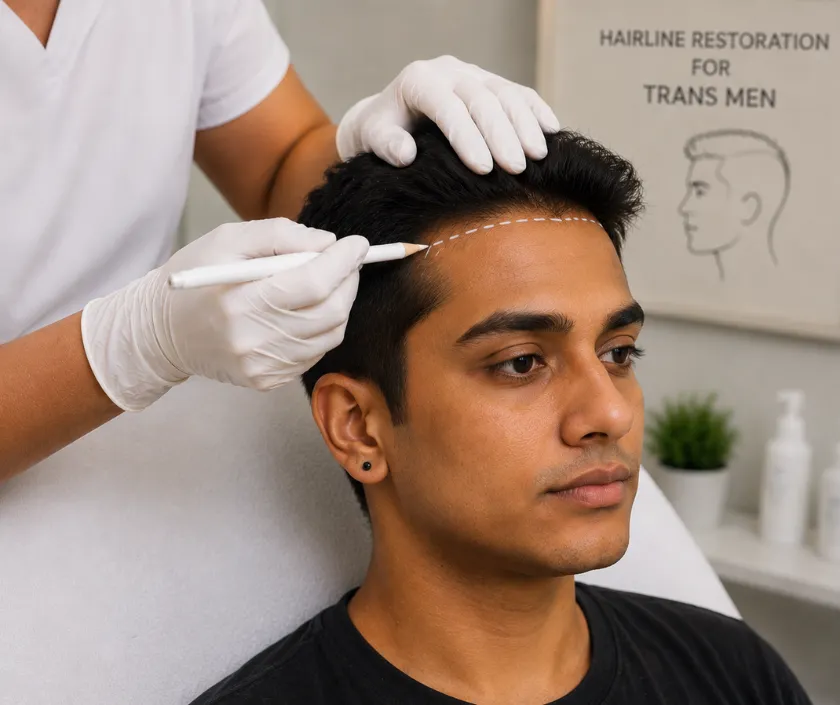
Hairline restoration for trans men is a treatment that reshapes the front hairline into a more masculine outline. It typically adds definition at the corners, creates a subtle M shape, and can set the line slightly higher with a touch of natural recession. The whole upper face then looks more angular and balanced.
Feminine hairlines often sit lower and follow a rounded curve. Masculine hairlines sit a little higher and carry deeper temple corners. The aim is to rebuild the right shape, not simply pile on hair. Dr. Ashutosh Shah studies your forehead, bone structure, and natural hair direction before designing the new line.
Hairline restoration: a procedure that reshapes or rebuilds the front hairline using transplanted follicles, so the outline looks stronger, more defined, and more masculine.
Who Is a Good Candidate?
Most trans men who want a more defined or masculine hairline can benefit. Good candidates usually have healthy donor hair at the back and sides of the scalp, since those follicles can be moved forward. A full review always comes first.
You may be a strong fit if any of these describe you:
- Your hairline sits low or follows a rounded, softer curve.
- You want stronger temple corners and a more angular frame.
- You feel your current hairline does not match your masculine features.
- Your hair loss is stable rather than fast and active.
During your visit we also assess scalp laxity and general health. Every face is different, so the plan is tailored to you. If you are on testosterone therapy, we will talk through how it can change your hair over time.
What Are the Benefits?
The main benefit is a hairline that finally fits your identity. A stronger, slightly higher outline with defined corners adds masculine structure to the face. Transplanted follicles give permanent results, since those hairs keep their own growth pattern.
Many of our patients also enjoy more styling freedom afterward. You can keep hair short, sweep it back, or shape the temples without the line looking soft. Day to day confidence often grows alongside the hair itself.
- A stronger, more masculine frame for the face.
- Defined temple corners and natural density.
- Permanent results with transplanted follicles.
- Greater freedom with short and styled cuts.
What Should You Expect During Treatment?
Your treatment starts with a private, relaxed consultation in Surat. Dr. Ashutosh Shah listens to your goals and examines your scalp, then draws a proposed masculine hairline on your forehead, so you can review and adjust the shape before any work begins.
On treatment day, the area is numbed for your comfort. Individual follicles are taken from the donor zone and placed one by one along the new line, each angled to match natural growth at the temples and front. You stay awake, comfortable, and informed about each stage. Precision matters most here, so the placement is slow and deliberate.
To see how this fits with other procedures, browse our non surgical masculinization treatments too.
Results, Sessions, and Downtime
Good results take time, and patience truly helps. After a transplant, the placed hairs shed within a few weeks, which is normal and expected. Fresh growth begins around the third or fourth month, and you see fuller density between nine and twelve months.
Many people reach their goal in one session, though some prefer a second session later to thicken the corners. Downtime tends to be short. Most patients return to gentle daily activity within a few days, while heavy exercise and direct sun should wait a couple of weeks. We hand you clear written instructions so nothing feels confusing.
How Much Does It Cost?
Cost depends on the number of follicles needed, the shape you want, and whether one or two sessions are planned. Every hairline is unique, so we never quote a single fixed price. You receive a clear, itemised estimate after your consultation, with no hidden charges.
For reliable background on hair loss and treatment choices, this NHS guidance is worth reading before your visit.
Common Myths
Several myths cloud hairline work, so let us address them plainly.
- Myth: the result looks unnatural. Follicles placed at correct angles by a skilled surgeon blend invisibly.
- Myth: the new hair needs special products. Transplanted hair grows like your own and needs no upkeep.
- Myth: recovery drags on for months. Most daily activity returns within days.
- Myth: every masculine hairline looks the same. Each line is shaped for that individual face.
Aftercare Tips
Careful aftercare protects your new hairline. For the first few days, sleep with your head slightly raised and avoid touching the grafts. Keep the area dry as advised, then wash gently once we confirm it is safe.
- Avoid heavy sweating, swimming, and saunas for two weeks.
- Shield your scalp from strong Surat sun with a loose hat.
- Avoid smoking and alcohol while you heal, since both slow recovery.
- Attend every follow up so we can track your growth closely.
Why Choose Elegance Transgender Clinic?
The hands behind your hairline matter enormously. Dr. Ashutosh Shah holds M.S., M.Ch. in Plastic Surgery along with DNB qualifications, and he brings more than twenty two years of surgical experience. Our clinic centres on transgender care, so the whole team understands your path with warmth and respect.
Patients across Surat, including our Adajan and Vesu locations, choose us because we plan thoughtfully, explain clearly, and never hurry a decision. We treat your goals as our own and stay beside you through every stage of healing. You can also see how this connects to your wider facial transformation plan.
Book Your Consultation in Surat
If a stronger, more masculine hairline feels like your next step, we would be glad to meet you. Reach out through our Surat clinic contact page to book a private consultation. You can also learn more in our guide to hair transplant for transgender patients. Take your time, ask everything, and let us help you feel fully yourself.
More Hair Restoration care
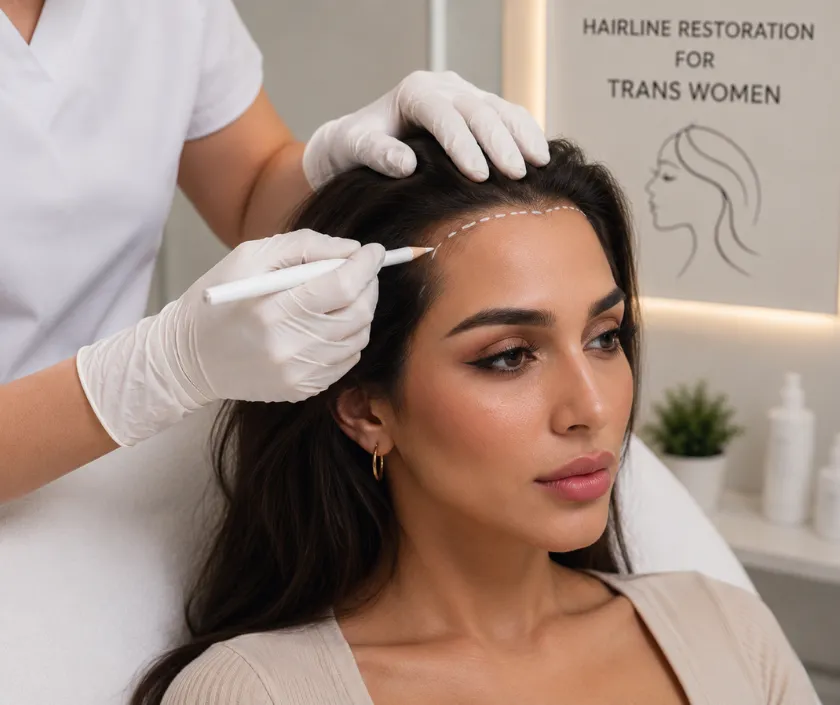 Hairline Restoration for Trans WomenHairline restoration for trans women softens an angular hairline into a rounder,...Read more
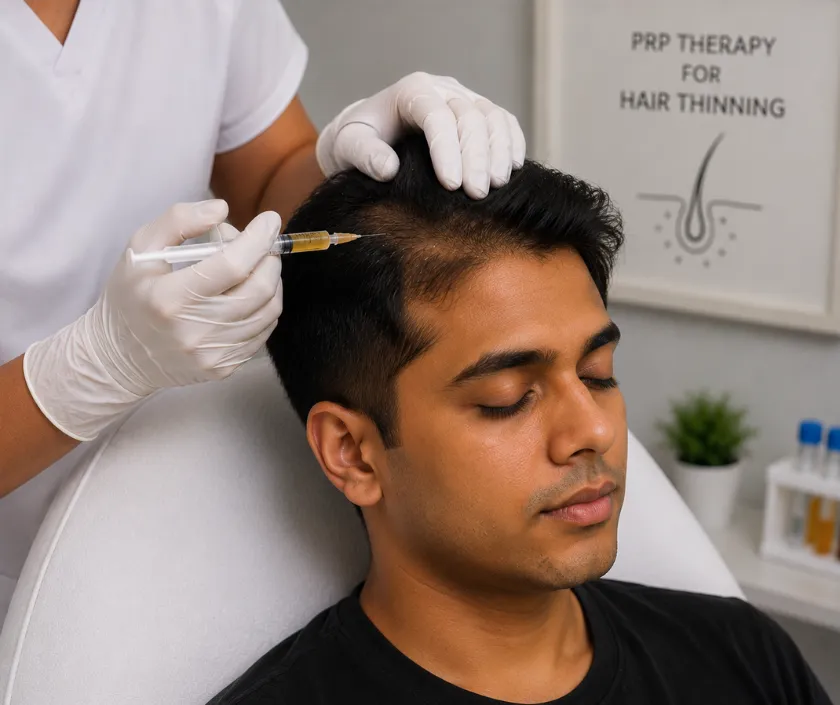 PRP for Hair ThinningPRP for hair thinning uses your own blood plasma to strengthen weak follicles an...Read more
 Beard RestorationBeard restoration builds fuller, natural facial hair for a more masculine look....Read more
Ready when you are
Talk to our team in Surat about hairline restoration for trans men. We listen first, explain your options clearly, and never pressure you to decide.