Bridge Reduction & Profile Softening
Nasal bridge reduction lowers a high bridge or dorsal hump for a softer, straighter profile. Learn the techniques, recovery, and realistic results in Surat.
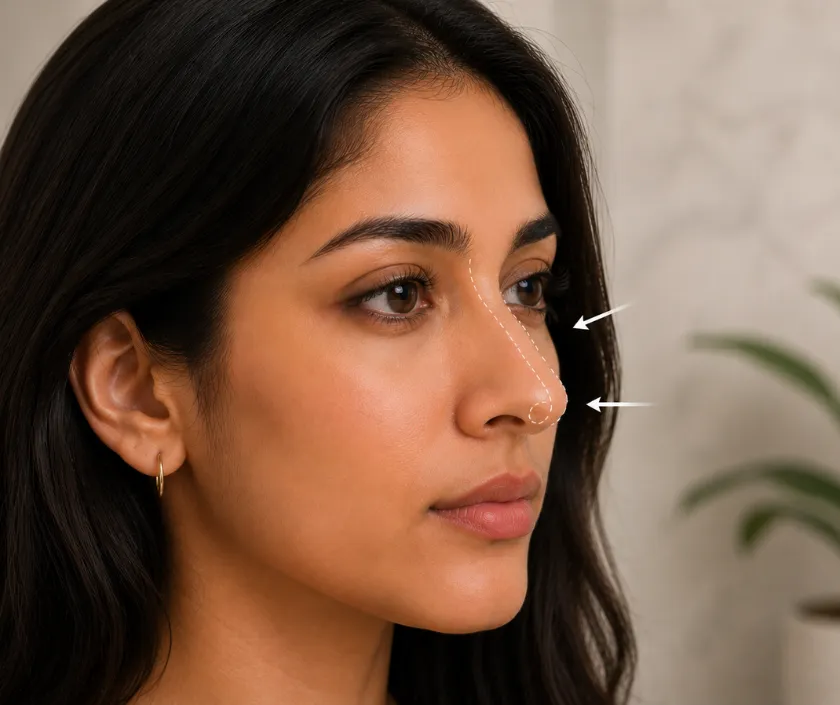
Seen from the side, the bridge of the nose shapes the whole profile. A high bridge or a bump along the top can make the face read as stronger and more masculine, even when the rest of the nose is soft. The bridge can be lowered and straightened with care. At Elegance Transgender Clinic in Surat, nasal bridge reduction is one of the most valued profile procedures, because it brings balance while keeping your face truly your own.
Below, Dr. Ashutosh Shah explains how bridge reduction and profile softening work, who they suit, and what your treatment might feel like. Everything is written in plain words, so you can decide calmly.
Key Takeaways
- Nasal bridge reduction lowers a high bridge or dorsal hump for a softer, straighter profile.
- The procedure smooths the side view, which is often where the nose reads as masculine.
- Bridge work pairs well with tip refinement for a fully balanced nose.
- Results settle gradually, and the new profile lasts well once swelling fades.
- Cost depends on your anatomy and the work needed, so a personal assessment is essential.
- Surat patients value the mix of experience, privacy, and attentive aftercare at Elegance Transgender Clinic.
Nasal bridge reduction: surgery that lowers and straightens the top of the nose for a softer, more feminine profile.
What is nasal bridge reduction?
Nasal bridge reduction is surgery that lowers and smooths the bony and cartilage ridge along the top of the nose. Reducing a high bridge or a hump makes the profile look straighter, which reads as more feminine. The surgeon reshapes the bridge through tiny incisions, then refines its line.
A feminine profile usually sits a little lower and straighter, sometimes with a soft slope. To reach this, the surgeon files down the bump and then narrows the bones so the bridge does not look flat or wide. The plan always respects your face as a whole, so the new profile suits your forehead, lips, and chin.
What are the benefits of profile softening?
Profile softening reshapes the side view of the nose, which is often the angle that reveals a strong bridge. After healing, the profile looks smoother, the bump disappears, and the face gains balance. Many patients say their side profile finally feels right, which brings a quiet sense of relief.
Beyond the emotional lift, the practical gains are real and lasting. Consider these common benefits:
- A straighter, lower bridge that softens the whole profile.
- A smooth top line with no visible hump.
- Better harmony between the nose, forehead, and lips.
- A natural change that keeps your face looking like you.
To see how this fits alongside other procedures, explore our full facial feminization and transformation options.
Who is a good candidate for dorsal hump removal?
A good candidate has a high bridge or a dorsal hump, is in stable health, and holds realistic goals. Most trans women and gender diverse people qualify, especially those whose side profile still reads as masculine. A short consultation confirms whether dorsal hump removal will help you.
During that meeting, we review your medical history, your hormone journey, and your hopes for the result. We study the bone, cartilage, and skin along the bridge, because the plan depends on all three. Candidates usually share a few things in common:
- A bridge or bump that stands out in side photos and daily life.
- No untreated health issues that make surgery unsafe.
- Patience for the slow, natural healing timeline.
- A clear, steady wish to soften the profile.
We follow the WPATH standards of care, so your readiness is assessed thoughtfully and with respect.
Which techniques are used in nose bridge surgery?
There are a few careful steps, and the right mix depends on your bridge. For a hump, the raised bone and cartilage are filed down. For a wide top, the nasal bones are narrowed. For a flat result, a small graft can restore a soft slope. Dr. Ashutosh Shah chooses the combination only after studying your face and any scans.
Hump reduction and dorsal smoothing
To remove a bump, the surgeon files or shaves the raised bone and cartilage until the top line looks smooth and even. Fine instruments make the change very precise. The profile then flows in a softer, straighter line that suits a feminine face.
Osteotomy to narrow the bridge
After a hump is lowered, the bridge can look a little wide or open at the top. To fix this, the surgeon narrows the nasal bones, a step called osteotomy, so the bridge looks slim and neat. It sounds technical, yet it is a well established part of nose bridge surgery, and it gives the most natural finish.
You can read more about the wider procedure in our guide on what facial feminization surgery involves.
What can you expect on the day?
On the day of surgery, you arrive at our Surat centre and meet the team for final checks. The procedure is done under general anaesthesia, so you stay comfortable and feel nothing. Incisions are kept tiny and hidden, which keeps any marks out of sight. Most bridge procedures take one to two hours, depending on the plan.
Once the bridge is reshaped, a light splint supports the new profile while it settles. You then rest in recovery while the team watches over you closely. Many patients go home the same day or after one night, based on their case and comfort.
What results are realistic?
Realistic results mean a smoother, straighter profile that looks like it was always yours, not a dramatic or artificial change. The hump disappears, the bridge looks slimmer, and the side view gains harmony. Because the bone and cartilage are reshaped, the new profile holds well once swelling settles.
Every nose is different, so outcomes vary with bone, cartilage, and skin thickness. We always share honest before and after expectations, never exaggerated promises. The final profile appears gradually, as the deeper swelling along the bridge fades over several months.
What is recovery like?
Recovery is usually gentler than people fear, with most swelling and bruising fading within two to three weeks. You may feel blocked, tight, or numb across the bridge at first, which eases over time. The splint usually comes off after about a week, and light daily activity returns soon after.
To help you settle, here is a simple guide to the early phase:
- Keep your head raised, especially while sleeping, to limit swelling.
- Avoid blowing your nose until you are told it is safe.
- Stay away from glasses resting on the bridge for several weeks.
- Attend every follow up so we can track your healing.
For a fuller picture of timelines, see our FFS recovery timeline guide.
How much does nasal bridge reduction cost?
There is no single fixed price, because the cost depends on your anatomy and the work you need. Simple hump smoothing differs from full reduction with osteotomy and a graft. An accurate quote comes only after a proper assessment, where we examine your bridge and discuss your goals openly.
During consultation, we explain exactly what your plan includes, with no hidden surprises. Several factors shape the final figure, such as the size of the hump, whether the bones are narrowed, whether other nose work is combined, and the anaesthesia and care involved. We will always give you a clear, written breakdown before you decide anything.
Common myths about bridge reduction
Plenty of worries circle this procedure, and most simply are not true. Clearing them up helps you choose with confidence rather than fear. Here are myths we hear often, with the honest reality:
- Myth: the bridge ends up flat. In truth, careful reshaping keeps a soft, natural slope, not a flat line.
- Myth: it leaves an obvious scar. Incisions are tiny and usually hidden inside the nose.
- Myth: narrowing the bones is unsafe. Osteotomy is a well established, controlled step.
- Myth: the profile looks right at once. The final line appears slowly as swelling fades.
Aftercare that protects your result
Good aftercare turns a careful surgery into a lasting outcome. We guide you closely through every step, so you never feel alone. Steady care in the first weeks matters most, because that is when the bridge settles into shape.
Practical aftercare includes keeping the area clean, taking prescribed medicines on time, and protecting the bridge from knocks or pressure. Eating well and resting properly help your body heal faster. Should any question arise, our Surat team stays reachable, so worries are answered quickly. You can also browse our wider patient education resources for more detail.
Why patients choose Elegance Transgender Clinic
People travel to our Adajan and Vesu centres because they want safety, skill, and genuine understanding together. Dr. Ashutosh Shah brings more than twenty two years of plastic surgery experience to every profile. The whole team treats each patient with warmth and complete privacy.
As a complete transgender surgical and aesthetic transformation centre, Elegance Transgender Clinic plans your bridge reduction as part of your wider journey, not in isolation. Your bridge, tip, forehead, and lips are designed to work together. Many patients tell us this joined up approach is exactly what gave them peace of mind.
Ready to soften your profile?
If a high bridge or a bump has weighed on your confidence, help is within reach. We would love to listen, study your face, and explain your real options without any pressure. Please book a private consultation in Surat, and let us walk beside you, one careful step at a time.
Ready when you are
Talk to our team in Surat about bridge reduction & profile softening. We listen first, explain your options clearly, and never pressure you to decide.