Hairline Recession in Trans Women
A receding, M shaped hairline can feel strongly masculine. Discover how Elegance Transgender Clinic in Surat lowers and restores a softer, feminine hairline.
Key Takeaways
- A receding, M shaped hairline often reads as a masculine trait.
- Hormones cannot rebuild lost hair or move a high hairline forward.
- Elegance Transgender Clinic in Surat lowers and restores feminine hairlines.
- Dr. Ashutosh Shah may use scalp advancement, grafting, or both together.
- Most people gain a softer, rounded hairline that frames the face.
What is it?
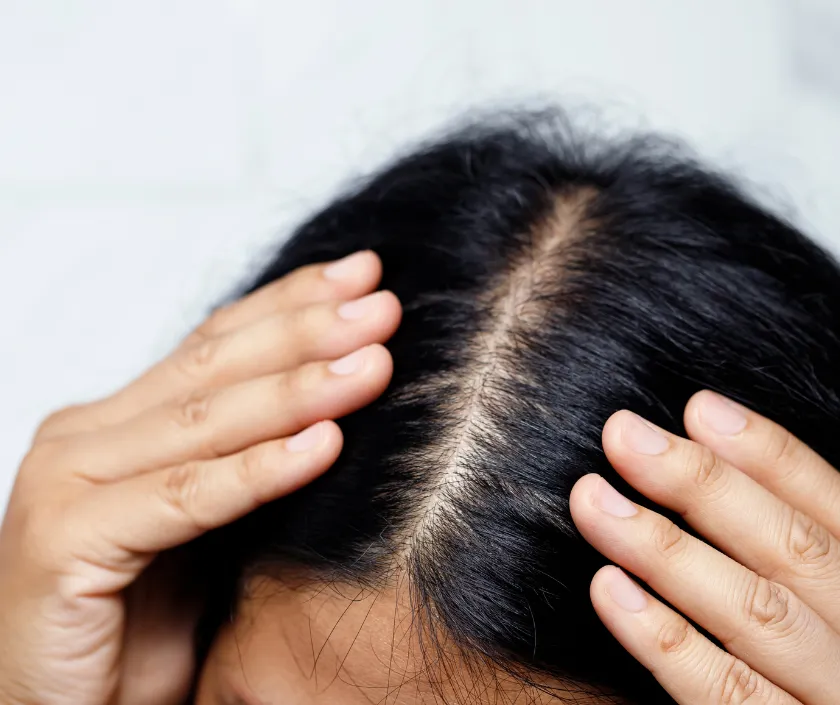
The hairline is the front edge where hair meets forehead, and its shape carries a surprising amount of weight in how a face reads. In people shaped by testosterone, it often sits high and takes on an M shape, with the corners drawn back near the temples. Clinicians call that pattern recession.
To many trans women, that shape looks distinctly masculine. A high, angular hairline stretches the forehead and widens the top of the face. The pattern traces back to genetics and past testosterone exposure, and left alone it rarely softens.
Hairline recession: a high or M shaped hairline where the corners pull back near the temples, giving the upper face a more masculine frame.
Hormone therapy can slow some thinning, but it will not lower a high hairline or refill the corners. Surgery is the reliable route to a rounder, lower hairline that frames the face the way you want.
It is worth knowing what actually reads as feminine. A feminine hairline tends to sit lower, curve in a rounded arc, and carry soft, slightly irregular edges instead of hard corners. A masculine one sits high with sharp recession at the temples. The differences look small on paper, yet a modest change in shape can shift how the whole face is read. We hold that in mind across the entire plan.
Who is affected?
Hairline recession shows up in many trans women and gender diverse people who want a softer face. Even those who began feminising care early can carry an M shaped hairline left over from earlier years. The pattern comes from genetics and hormone history, so it stays put until treated.
People with a receding hairline tend to describe the same things. They style around the corners, or feel a tall forehead throws the face off balance. Some feel boxed in by the hairstyles they can wear. We know how much this weighs on a person.
- Trans women who want a lower, rounder hairline.
- People with M shaped recession at the temples.
- Those who feel their forehead looks tall or wide.
- Anyone in Surat or nearby seeking skilled, caring treatment.
Goals shift from one person to the next. Some want only the corners filled. Others want the whole hairline brought down and rounded out. We build the plan around your features and your wishes, and our broader facial transformation work often plays into that.
Plenty of people are simply tired of working around it. They have leaned on fringes, partings, and careful styling for years, and many avoid wind, swimming, or pulling their hair back. Hearing that the hairline itself can be reshaped tends to land as real relief. We listen closely to these everyday frustrations, because they tell us a lot about the result that will actually help.
How does Elegance Transgender Clinic treat it?
Care opens with an unhurried consultation in Surat, at our Adajan or Vesu location. Dr. Ashutosh Shah studies your hairline, forehead height, and the quality of your hair and scalp. From there we settle together on the approach that gives the softest, most natural result.
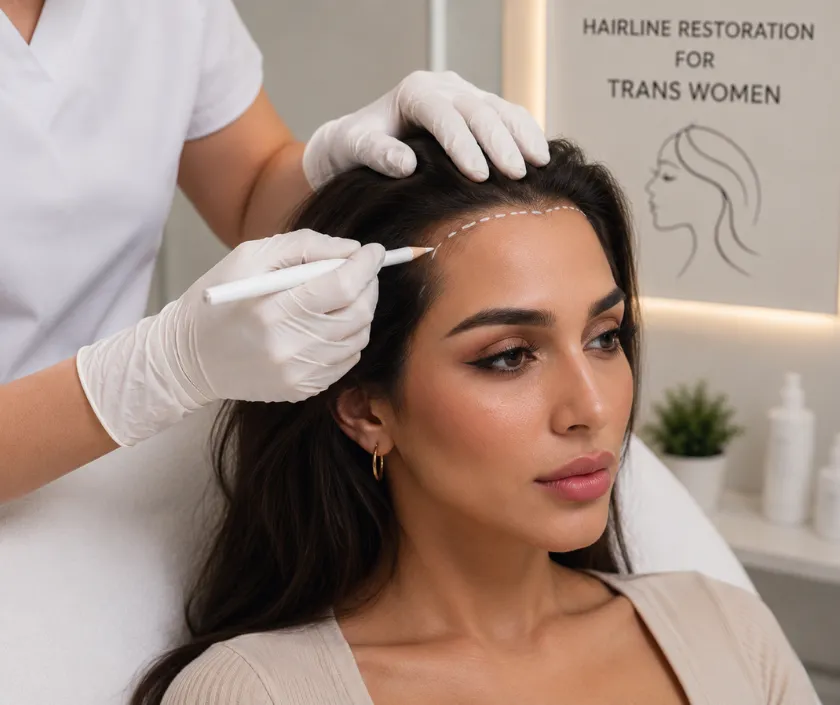
When the forehead is tall and the scalp is flexible, a hairline lowering procedure advances the scalp forward and brings the hairline down in a single step. When the corners are thin or the pattern is uneven, grafting fills and rounds the line using your own follicles. Often the two together produce the most balanced shape. Dr. Ashutosh Shah holds M.S. and M.Ch. Plastic Surgery qualifications along with DNB, and brings 22 plus years of experience to the planning.
All the way through we watch the outline and the direction of hair growth. Get those right and the new hairline looks as though it was always there. You can see the rest of what we offer on our conditions we treat page whenever you like.
Our practice follows the WPATH standards of care, which keeps treatment safe and considered. We talk you through every detail before surgery and stay close during recovery, so you are never left guessing. Our patient education pages cover the basics if you want to read ahead.
Hairline care close to home in Surat
Surat has a deep bench of modern surgical care, and our clinic works within it. Two locations, Adajan and Vesu, keep appointments easy to reach. Local follow up lets us check your healing in person rather than from afar. People travel to us from across Gujarat, though those nearby get the comfort of recovering among familiar surroundings.
Designing a hairline that looks born with you
A natural hairline is never a hard, ruled line. We build soft, slightly uneven edges and set single hairs along the front, the way they grow on their own. The result blends in and reads as entirely yours. That fine detail is something we hold ourselves to at Elegance Transgender Clinic, because a believable hairline is what underpins lasting confidence.
Expected outcomes
Most people end up with a lower, rounder hairline that softens the whole face. The forehead looks shorter, the corners fill in, and the upper face reads as more feminine. Scalp advancement shows its change at once, while grafted hair fills in steadily over the months that follow.
Recovery usually runs smoothly with a little patience. Mild swelling and tenderness are normal early on, and grafted areas form small crusts that settle within days. We give clear aftercare instructions and stay reachable for questions. Most people are back to daily life within one to two weeks, though grafts take several months to reach full density.
Past the visible change, people often describe a real sense of freedom. With the hairline framing the face softly, they wear their hair back, feel the wind, and step into photos without a second thought. The relief of no longer hiding behind a fringe can be liberating. That side of the result counts for as much to us as the surgery, and it is what people tend to treasure most.
- A lower, rounder, more feminine hairline.
- A shorter looking forehead that balances the face.
- Filled temple corners with a natural growth pattern.
- Lasting results, with grafts thickening over several months.
If a receding hairline has been holding your confidence back, skilled help is within reach. We would be glad to meet you, listen closely, and walk you through what your result could look like. To begin, book a private consultation in Surat and Elegance Transgender Clinic will take it from there.
How we treat hairline recession in trans women
Ready when you are
Talk to our team in Surat about hairline recession in trans women. We listen first, explain your options clearly, and never pressure you to decide.