Hair Thinning on HRT
Scalp hair can change during hormone therapy, sometimes thinning or shedding. Learn what causes it, who it affects, and how Elegance Transgender Clinic in Surat helps you keep fuller, healthier hair.
Key Takeaways
- Scalp hair can change on HRT, and some trans women notice thinning, shedding, or a receded hairline.
- Because earlier testosterone exposure may have already affected hair, some loss can predate hormone therapy.
- Treatments such as PRP and hairline restoration can support thicker, healthier hair over time.
- At Elegance Transgender Clinic in Surat, hair plans are matched to your pattern, your goals, and your comfort.
- Most people see fuller, stronger hair with the right, patient approach.
- Acting early tends to protect more of your existing hair.
What is it?
Hair thinning on HRT describes the shifts in scalp density and pattern that can show up during transition. For trans women, oestrogen often helps the hair, but thinning that started under earlier testosterone exposure may already be there. Many people begin hormones with a hairline or crown that has already pulled back.
Hair grows in cycles, so a degree of shedding and regrowth is normal. What worries us is the steady kind: a widening part, a creeping hairline, density that keeps dropping. That pattern wants attention, and the earlier the better.
There is a biological reason for the urgency. Once a follicle weakens, it does not always bounce back on its own. Support it sooner and you hold on to more of the hair you still have. Waiting rarely helps.
Androgenic hair loss: thinning driven by hormone sensitivity in the hair follicles, often affecting the hairline and crown, which can begin before HRT starts.
Who is affected?
Most trans women run into some hair concern at one point or another, though the picture differs from person to person. One notices a hairline that receded years before transition. Another sees general thinning or extra shedding as hormone levels move. Genetics drives a lot of how hair behaves.
Several things shape the experience: age, family history, how long the loss has been running, and overall health. Stress, diet, and the grind of daily life in a busy city like Surat feed into hair quality too.
- A receded hairline from earlier years is a common starting concern.
- General thinning across the crown may develop slowly over time.
- Temporary shedding can occur as hormone levels settle.
- Those under ongoing stress may notice hair quality dip further.
Hair is rarely just about appearance. It shapes how feminine and how settled a person feels. That is why so many trans women come to us looking to protect and rebuild it. A fuller hairline softens the face and brings a real sense of ease. Our wider aesthetic non surgical work often sits alongside hair care for that reason.
Will hormones reverse my hair loss?
People ask this often, and a straight answer helps. Oestrogen can slow thinning and, in some cases, improve hair quality over the months that follow. Loss that took hold under earlier testosterone exposure, though, may not fully reverse on hormones alone.
Since the result swings so much from one person to the next, targeted support tends to be what tips the balance. Many people pair hormones with treatments like PRP for a stronger outcome. Setting honest expectations early saves disappointment and points you toward better choices.
How Elegance Transgender Clinic treats it
We start with a close look at your scalp and hair. Dr. Ashutosh Shah reads your pattern, your density, and the direction the thinning is heading. Then he lays out which treatments fit and what a realistic result looks like.
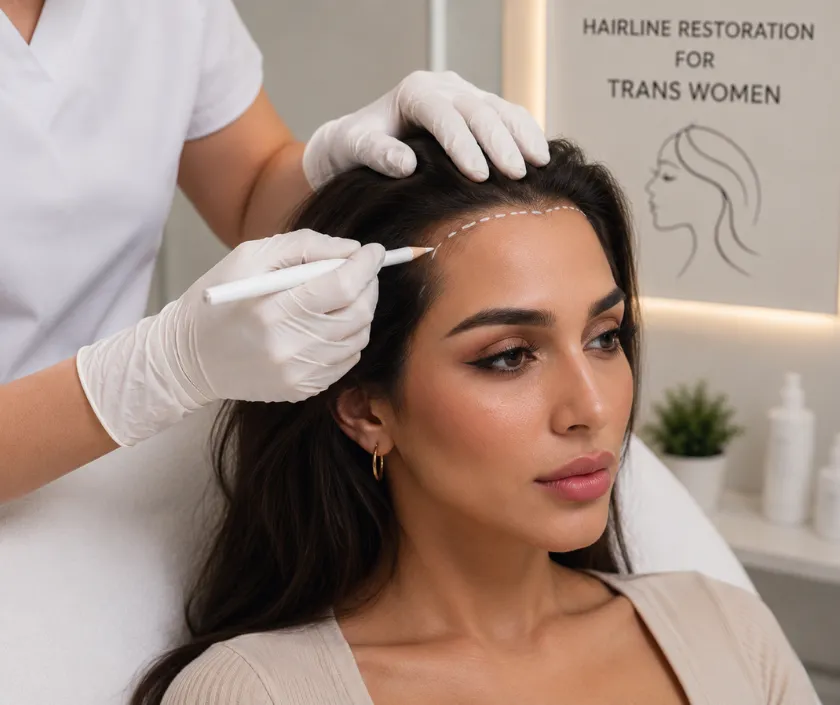
For early or moderate thinning, PRP draws on components from your own blood to back stronger, healthier growth. Where the hairline has receded, hairline restoration rebuilds a softer, more feminine frame. To see how this connects to the rest of our work, our conditions we treat page sets it in context.
No two scalps are the same, so we skip the one size template. The plan tracks your pattern, your goals, and the stage of thinning. We also pair clinic treatments with plain habits, gentle care and decent nutrition among them, to give the hair the best footing.
Hair concerns can feel deeply personal, and we treat them that way. Every visit stays private and free of judgement. Listening properly is how we plan care that respects both your hair and how you feel about it. Patients who want more reading can dip into our patient education library.
What a typical plan looks like
- A scalp assessment that maps your hair pattern and density.
- Tailored treatment such as PRP sessions or hairline restoration when suitable.
- Simple supportive habits around gentle care, diet, and scalp health.
- Reviews over time so the plan adapts as your hair responds.
For neutral background on hair loss and common causes, this NHS guidance can help you understand your hair better.
Supporting your hair between treatments
Good habits let your treatments do their best work. Gentle washing, a soft touch, and stepping back from harsh styling all protect fragile hair. Heat tools and tight styles strain the scalp, so easing off them usually pays off.
Nutrition and general health matter too, since hair mirrors how the body is doing. A balanced diet, steady sleep, and lower stress all feed healthier growth. Stacked alongside clinic care, these small moves give your hair a firmer base to build on.
How PRP supports your hair
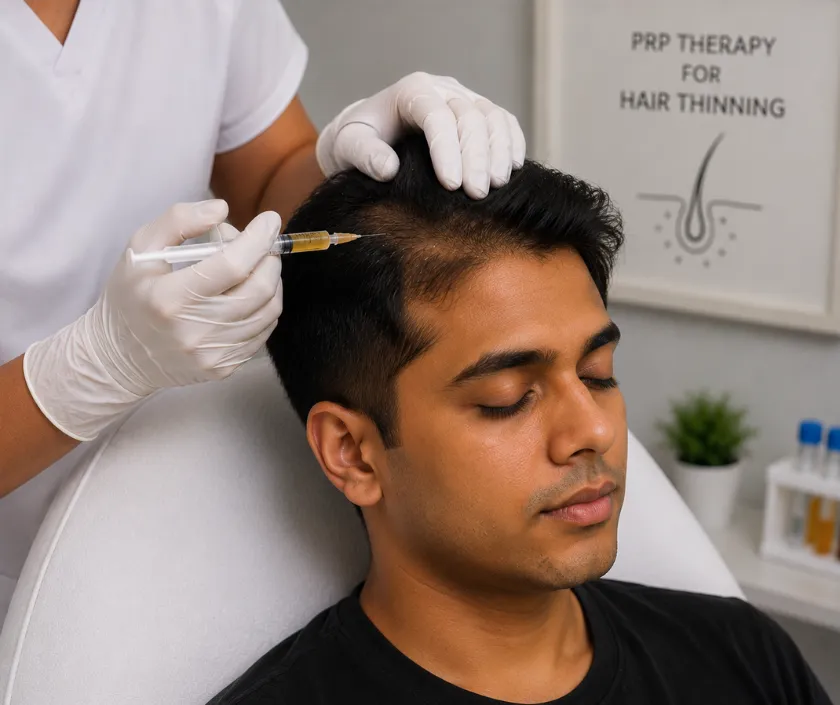
PRP is a natural option that many people find reassuring. It uses components drawn from your own blood, applied to the scalp to support the follicles. Because it leans on your body's own resources, it suits anyone who prefers a less synthetic route.
Across a run of sessions, PRP helps follicles grow stronger and slows further shedding. It rewards patience, though, since hair answers slowly over months. We map out a clear course and review your progress at each step, so you always know where you stand. Where the hairline has pulled back too far for PRP alone, restoration rebuilds a softer frame, and we will always tell you straight which path suits your hair.
Expected outcomes
With steady, consistent care, most trans women see fuller, stronger, healthier hair over time. Shedding eases, density climbs, and a restored hairline softens the face. For many people that adds up to a quiet lift in confidence.
Results hinge on the cause, the stage, and how the hair responds, so we keep expectations honest. PRP and restoration do their best work with time and follow up, and some people benefit from ongoing maintenance. Even so, most people land on meaningful improvement with the right plan. Because hair moves slowly, sticking with the agreed course gives the best shot at fuller growth that holds for years.
If hair thinning is weighing on you, you do not have to sort it out alone. Come in for a private consultation in Surat, where we will listen and map out care for your hair. Book an appointment or reach out to our Surat team whenever you feel ready.
Ready when you are
Talk to our team in Surat about hair thinning on hrt. We listen first, explain your options clearly, and never pressure you to decide.