Facial Hair in Trans Women
Facial hair is one of the most common concerns for trans women in Surat. Learn what causes it, who it affects, and how Elegance Transgender Clinic helps you achieve smooth, lasting results.
Key Takeaways
- Facial hair is a leading concern for many trans women, and it often remains even while taking hormones.
- Beard hair grows deep and thick, so it usually needs more than a razor to manage well.
- Laser treatment offers a safe and lasting way to reduce unwanted facial hair over a series of sessions.
- At Elegance Transgender Clinic in Surat, every plan is private and matched to your skin and hair type.
- Most people see softer, lighter, and far less visible hair as treatment progresses.
- Early, steady care tends to give the smoothest and most confident long term result.
What is it?
Facial hair in trans women is the beard and moustache growth laid down during male puberty. Hormone therapy slows new growth, but it rarely clears hair that is already there. So many trans women keep dealing with stubble, shadow, or coarse hairs on the chin, cheeks, upper lip, and neck.
Beard hair is not like other body hair. It grows from deep, strong roots and bounces back fast after shaving. A razor or cream only deals with the surface while the root keeps churning out new hair underneath.
Beard hair also tends to feel coarser and look darker than hair elsewhere on the body. Even a clean shave can leave a visible shadow beneath the skin within hours. That shadow, not the length, is usually what bothers people the most.
Terminal hair: the thick, dark, deeply rooted hair that forms a beard, which usually needs laser or similar treatment to reduce in the long term.
Who is affected?
Nearly every trans woman who went through male puberty has some degree of facial hair. The amount and thickness vary a great deal. One person has light, patchy growth. Another has a dense, dark beard that shows even after a close shave.
A few things drive how much facial hair someone has, including genetics, age, ethnicity, and how long hormone therapy has been running. Many people in Surat and across Gujarat have darker, coarser hair, which makes a five o'clock shadow stand out more on the skin.
- Trans women in the early stages of transition often notice the most growth.
- People with light skin and dark hair tend to see the strongest contrast.
- Those who shave daily may also face irritation, ingrown hairs, or razor bumps.
- Anyone whose work involves close contact or photos may feel extra pressure about shadow.
Past the physical side, facial hair wears on confidence and daily comfort. Many people just want a calm, judgement free space to talk through their options. Daily shaving eats time and energy too, something people rarely mention but feel keenly.
Why does facial hair stay even on hormones?
This question comes up in almost every consultation, and the answer brings real relief. Hormone therapy softens some hair and slows fresh growth, but it cannot undo the strong follicles puberty already built. Those roots are mature, so they keep producing hair regardless of hormone levels.
Think of hormones as easing off the throttle rather than removing the hair. Lasting change needs a treatment that works directly on the follicle. Laser does exactly that, which is why it sits so well alongside ongoing hormone therapy. You can see how it fits within our aesthetic and non surgical care.
How Elegance Transgender Clinic treats it
At Elegance Transgender Clinic, we start with a private consultation. Dr. Ashutosh Shah looks closely at your skin tone, hair colour, and growth pattern, then explains which approach suits you and what results are realistic.
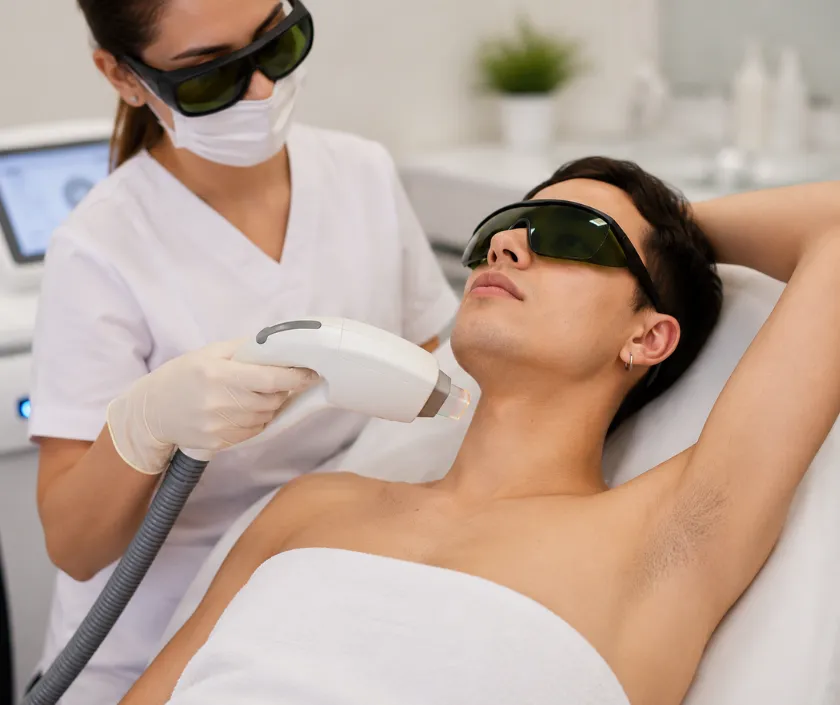
For most trans women, laser hair reduction is the main treatment. The laser targets the pigment in the hair root and weakens growth over time. Hair grows in cycles, so several sessions spaced a few weeks apart give the best effect. Our wider approach to common transition concerns explains how each plan is shaped around you.
We pay close attention to darker Indian skin tones, choosing settings and devices that treat such skin safely and lower the risk of marks or irritation. Each session stays comfortable, with cooling and clear aftercare guidance.
Comfort matters as much as results, so we move at a pace that suits you. Some people start with the upper lip and chin, then add the cheeks and neck once they feel settled. Our team explains each step, answers questions, and keeps the whole experience private and respectful.
What a typical plan looks like
- A first consultation to map your hair and skin and to answer every question.
- A series of laser sessions, usually spaced four to eight weeks apart.
- Simple home care between visits, such as sun protection and gentle moisturising.
- Reviews along the way so we can adjust the plan as your hair thins.
For independent background on laser hair reduction, you may find this NHS guidance helpful when comparing your options.
Caring for your skin between sessions
Good home care protects both your skin and your results. Gentle cleansing, daily sunscreen, and light moisturising keep the skin calm and ready for the next visit. Sun exposure can affect treated skin, so we stress shade and protection, which matters in the bright Surat climate.
Shaving between sessions is fine and often helpful, since it leaves the root in place for the laser to target. Plucking and waxing should be avoided, though, because they pull out the very root we want to treat. With these habits, each session builds steadily on the last.
Expected outcomes
With each session, facial hair gets softer, lighter, and slower to return. Eventually many trans women find they shave far less often and the shadow or stubble fades from view. Daily routines get easier and the skin feels calmer.
Results depend on hair colour, skin type, and how the hair responds, so we keep expectations honest from the start. Even so, most people enjoy a clear and lasting reduction once the full course is done. Occasional touch up sessions keep the result smooth over the years.
Many people describe a change that reaches past the mirror, since smoother skin lifts mood and eases dysphoria. The benefit often goes well beyond appearance. Being free of constant shaving gives back both time and quiet confidence.
If facial hair is affecting your confidence, you do not have to manage it alone. We warmly invite you to a private, unhurried consultation in Surat, where we will listen, explain your choices, and plan care that fits you. Book an appointment with our Surat team whenever you feel ready.
How we treat facial hair in trans women
Ready when you are
Talk to our team in Surat about facial hair in trans women. We listen first, explain your options clearly, and never pressure you to decide.