Facial Feminisation Surgery for Patients from Ahmedabad: Planning Your Visit to Surat
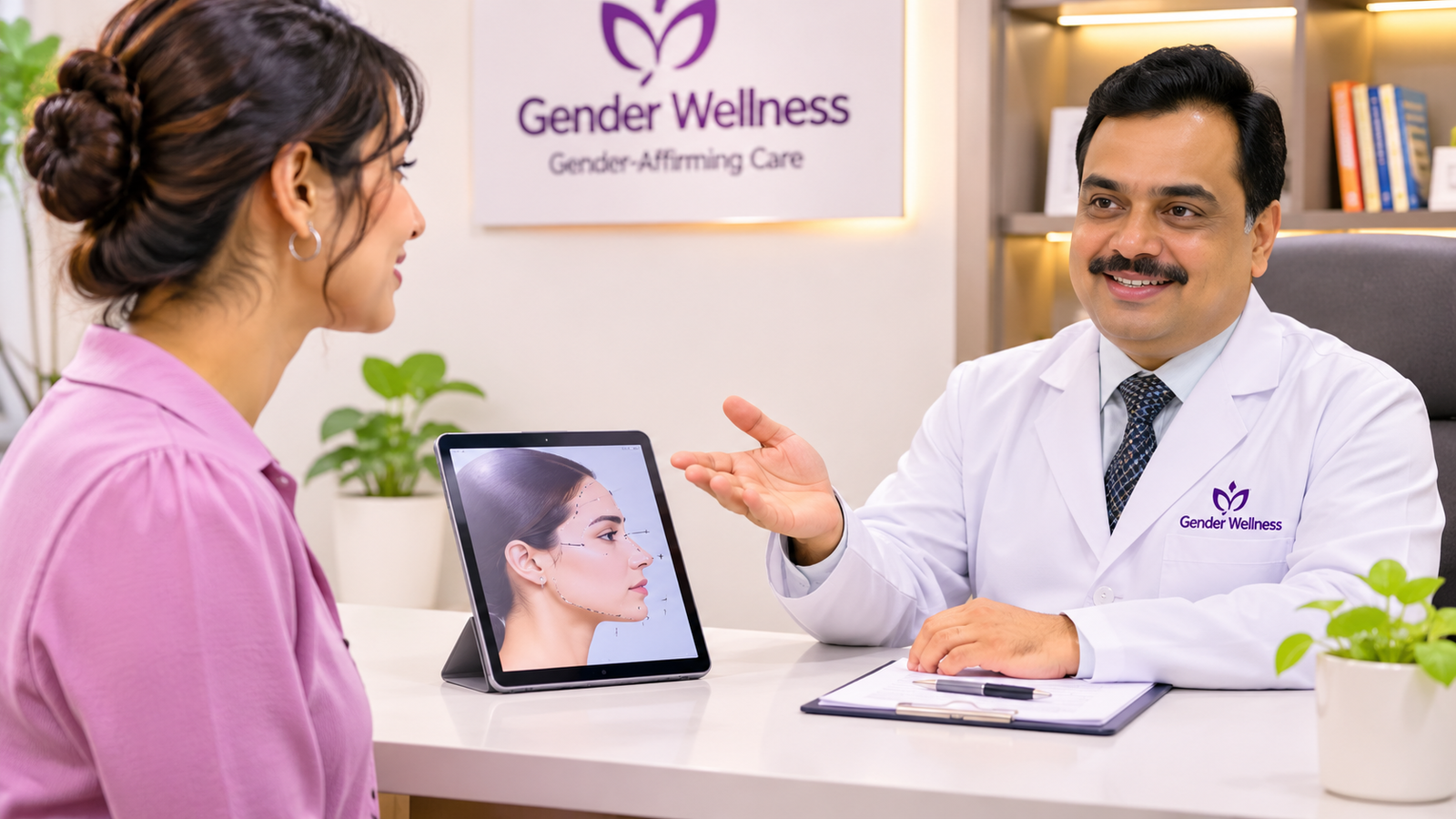
A realistic clinic consultation showing Dr. Ashutosh Shah discussing facial feminisation surgery with a patient using a digital facial planning illustration.
Facial feminisation surgery (FFS) is a collection of procedures that can reshape selected facial features to create a more traditionally feminine appearance. Patients travelling from Ahmedabad to Surat usually begin with a consultation, complete the required medical assessments, and schedule surgery and follow-up appointments according to their treatment plan.
The procedure, recovery period and overall cost depend on the facial areas being treated, the complexity of surgery and individual health requirements.
Quick answer: Patients considering facial feminisation surgery should first discuss their goals, medical history and expectations with a qualified surgeon. After assessment, the surgical team can explain the recommended procedures, expected hospital stay, recovery requirements and timing of follow-up visits.
Quick Facts: Facial Feminisation Surgery
| Detail | What patients should know |
|---|---|
| Procedure | Facial feminisation surgery (FFS) |
| Typical duration | [Surgeon to confirm duration for the planned procedures] |
| Anaesthesia | Often general anaesthesia for extensive facial or bone procedures; varies by operation |
| Hospital stay | [Surgeon to confirm expected day-care or inpatient stay] |
| Back to work | Often approximately 2–3 weeks for some procedures; depends on surgical extent and job demands |
| Follow-up visits | [Surgeon to confirm the usual number and schedule] |
| Final results | Several months; some procedures may take a year or longer to settle |
| Cost | Individual quotation based on procedures, anaesthesia, hospital care and follow-ups |
These are general planning considerations, not guaranteed timelines. Dr. Ashutosh Shah should confirm the clinic-specific details before publication.
What Is Facial Feminisation Surgery and Who Is It For?
Facial feminisation surgery includes procedures designed to modify facial features that a person wishes to change.
It may be considered by transgender women, non-binary individuals and others seeking a more feminine facial appearance. Surgery is a personal choice, not a requirement for gender identity.
Depending on facial anatomy and individual goals, treatment may include:
- Forehead contouring: Reshaping a prominent forehead or brow ridge.
- Brow lift: Changing eyebrow position to improve facial proportions.
- Rhinoplasty: Adjusting the shape, width or projection of the nose.
- Cheek augmentation: Enhancing cheek volume or contours.
- Jaw contouring: Changing the width or shape of the lower face.
- Chin reduction: Adjusting chin projection, width or shape.
- Tracheal shave: Reducing the prominence of the thyroid cartilage when appropriate.
Not everyone needs every procedure. Some patients benefit from one targeted operation, while others may consider several procedures performed together or in stages.
The full facial transformation programme provides additional information about facial gender-affirming treatment options.
How does the surgeon choose the right procedures?
The surgeon examines facial proportions, bone structure, soft tissues, skin quality and medical history.
During consultation, patients can explain which features concern them and what results they hope to achieve.
Dr. Ashutosh Shah can discuss realistic changes, potential scars, surgical limitations and whether combining procedures is appropriate.
For example, chin reduction may be considered when chin shape or projection is a particular concern. However, the recommendation depends on individual anatomy.
How Is Facial Feminisation Surgery Done, Step by Step?
Although the exact operation varies, patients can generally expect the following stages.
Step 1: Initial consultation
The process begins with a discussion about treatment goals, medical history, current medications and previous procedures.
The surgeon assesses facial anatomy and explains possible surgical options.
Patients may also discuss whether an initial remote consultation is available before travelling.
Step 2: Facial assessment and planning
The assessment may involve clinical photographs, facial measurements and imaging when necessary.
The surgeon identifies the areas requiring treatment and explains whether the procedures can be combined or should be performed separately.
Patients should understand where incisions may be placed, what changes are achievable and which risks apply.
Step 3: Preoperative investigations
Depending on the procedure and medical history, tests may include blood investigations, an anaesthesia assessment and imaging.
Patients should provide information about medications, allergies, nicotine use and hormone therapy.
Do not stop prescribed medication or hormone treatment without medical advice.
Step 4: Surgery
The operation takes place according to the agreed surgical plan.
More extensive facial bone procedures are commonly performed under general anaesthesia. Smaller procedures may have different anaesthesia requirements.
Incisions may be placed near the hairline, inside the mouth, around the nose or at other locations depending on the operation.
Step 5: Postoperative monitoring
After surgery, the medical team monitors breathing, bleeding, discomfort, swelling and other immediate recovery concerns.
The need for hospital admission depends on the procedures performed and the patient's condition.
Step 6: Follow-up care
Follow-up appointments allow the surgeon to examine healing, check incisions and review swelling, sensation and recovery.
Patients travelling from Ahmedabad should arrange their return journey around the surgeon's instructions rather than assuming they can travel immediately after surgery.
Recovery: What the First Weeks Look Like
Recovery after facial feminisation surgery varies considerably. A patient undergoing one smaller procedure may recover differently from someone having several facial bone procedures.
The following timeline provides general expectations.
| Recovery period | Possible changes | Planning considerations |
|---|---|---|
| Days 1–3 | Swelling, bruising, discomfort and tightness | Rest, take prescribed medicines and attend monitoring as advised |
| Days 4–7 | Swelling and bruising may remain noticeable | Attend early checks and avoid strenuous activity |
| Week 2 | Some bruising improves; swelling continues | Light activities may resume if cleared |
| Weeks 3–4 | Gradual improvement in comfort | Return to work depends on the procedure and occupation |
| Weeks 5–6 | Further healing and reduction in swelling | Ask before restarting exercise or heavy lifting |
| Following months | Scars and facial contours continue changing | Attend scheduled reviews and allow time for final results |
When can patients return to work?
Some patients may return to desk-based work after approximately two to three weeks. More extensive procedures or physically demanding jobs may require longer.
The surgeon should provide an individual recommendation.
When do final results become visible?
Early improvements become more noticeable as swelling reduces. However, facial tissues and scars continue changing over several months.
Nasal surgery and extensive bone-contouring procedures may take a year or longer to fully settle.
What warning signs require medical attention?
Contact the surgical team promptly for increasing redness, fever, worsening pain, unusual discharge or unexpected swelling.
Severe breathing difficulties, uncontrolled bleeding or rapidly expanding swelling require emergency medical assessment.
Patients should arrange access to appropriate medical care after returning home.
Which Factors Change the Cost?
Facial feminisation surgery costs vary because FFS is not a single standardised operation.
The final estimate depends on the number and type of procedures, surgical complexity, hospital facilities and postoperative requirements.
| Cost factor | Why it matters |
|---|---|
| Number of procedures | Multiple procedures may increase operating time and complexity |
| Bone contouring | May require imaging, specialised instruments and additional planning |
| Anaesthesia | Longer operations can increase anaesthesia and monitoring charges |
| Hospital admission | Room category and length of stay affect expenses |
| Investigations | Blood tests, imaging and medical assessments may be charged separately |
| Medicines and dressings | Postoperative care may add costs |
| Travel and accommodation | Patients may need temporary accommodation near the clinic |
| Follow-up appointments | The number of visits affects travel planning |
What should a written estimate include?
Before confirming surgery, request a quotation covering surgeon fees, anaesthesia, operating theatre charges, hospital admission, tests, medicines, dressings and planned follow-up visits.
Also ask whether treatment for complications or revision surgery would involve additional charges.
A reliable numerical estimate should be provided after assessment.
Facial Feminisation Surgery in Ahmedabad: How to Plan Your Visit to Surat
Patients researching facial feminisation surgery in Ahmedabad may consider travelling to Surat for consultation and treatment.
Planning ahead can reduce avoidable travel and help patients attend important postoperative appointments.
1. Arrange the initial consultation
Contact the clinic to discuss appointment availability and whether a preliminary online consultation is offered.
If remote assessment is available, the clinic may request relevant medical records or photographs through an appropriate secure channel.
However, an in-person examination may still be necessary before finalising the surgical plan.
2. Prepare your medical documents
Bring a list of current medications, previous surgery details, relevant investigations and any medical conditions that could affect treatment.
It is also helpful to write down questions about expected results, scars, costs and recovery.
3. Plan travel and accommodation
Ahmedabad and Surat are connected by road and rail. However, journey times vary by transport, traffic and schedule.
Patients should not assume that travelling home immediately after general anaesthesia will be appropriate.
Ask the surgical team whether you should remain near the hospital after discharge and whether someone must accompany you.
4. Arrange help during recovery
Depending on the procedure, patients may need help with meals, transportation, medicines and daily activities.
A responsible adult may be required to accompany the patient after anaesthesia and assist during early recovery.
5. Schedule postoperative appointments
Before leaving Surat, obtain a written follow-up plan.
Ask which appointments require an in-person examination and whether any later reviews can be conducted remotely.
For a more detailed explanation of the procedure and local recovery considerations, read facial feminisation surgery in Vesu, Surat: procedure, recovery and cost guide.
Questions to Ask Before You Decide
A consultation should help patients understand both the potential benefits and the limitations of surgery.
Consider asking:
- Which procedures are suitable for my facial anatomy?
- Can the operations be performed together, or should they be staged?
- Where will scars be located?
- What changes in sensation or facial movement are possible?
- What is the expected hospital stay?
- How long should I remain near the hospital?
- When can I travel safely?
- How many follow-up appointments are necessary?
- What is included in the written cost estimate?
- What happens if complications or revision surgery become necessary?
Patients should also discuss possible bleeding, infection, asymmetry, delayed healing, nerve injury and anaesthesia-related risks.
No surgical procedure is completely risk-free. Understanding the risks and alternatives is an important part of informed consent.
Conclusion
Facial feminisation surgery requires careful planning, particularly for patients travelling between cities.
The appropriate procedures, anaesthesia, hospital stay, recovery time and costs depend on individual anatomy, treatment goals and medical suitability.
Dr. Ashutosh Shah can assess the available options and explain the expected surgical journey during consultation.
Have questions about your situation? Contact Gender Wellness to enquire about appointments, medical assessment and follow-up arrangements.